
When most photographers think of landscape photography, they imagine wide-angle lenses capturing sweeping vistas and endless skies. While that’s a tried-and-true approach, there’s a growing appreciation for using telephoto lenses — like the popular 70-200mm or even a 100-400mm — to create landscape images that feel more intimate, focused, and powerful.
But what does it really mean to shoot landscapes with a longer lens? And why are more photographers choosing to leave their wide-angle in the bag? Let’s walk through this idea from a beginner’s perspective, building our understanding step by step.
A New Way of Seeing Landscapes
When you’re standing in front of a dramatic mountain range or vast coastline, the instinct is to reach for your widest lens and try to “fit it all in.” That’s natural. But sometimes, capturing everything results in images that feel cluttered or lack a clear focal point.
This is where a telephoto lens changes everything.
Instead of trying to show it all, a telephoto lens helps you find the story within the scene — zooming in on shapes, light, texture, and relationships between elements.
It’s not just about zooming; it’s about simplifying. It’s about noticing the curve of a distant ridge, the way cloud shadows stretch across a valley, or how a tree catches light against a dark slope.

Why Use a Telephoto for Landscapes?
Wide-angle lenses capture everything — sometimes too much. Telephoto lenses allow you to be selective, and that’s powerful.
Key reasons to consider a longer lens:
Compression
Compression is the visual effect where distant elements in the scene appear closer together. This isn’t a distortion but rather a natural outcome of using a longer focal length. In landscape photography, compression can create dramatic compositions. For example, when shooting a mountain range with a telephoto lens, the individual peaks seem to overlap, stacking on top of one another with very little visual space between them. This brings a sense of power and unity to the scene, unlike the sprawling look of a wide-angle shot. It also helps give scale and impact to distant backgrounds that might look small or unimpressive with a wide lens.
Isolation
Telephoto lenses make it easy to pick out a subject from its surroundings. Whether it’s a single tree standing on a hill, a colorful barn in a field, or wildlife within a vast environment, zooming in lets you create a clean, focused composition. This is especially useful when the broader scene is messy, busy, or lacking a clear focal point. With isolation, you’re inviting the viewer to look exactly where you want them to look. It’s an effective way to simplify the chaos of the natural world and guide the viewer’s eye to the most important part of your frame.
Depth & Scale
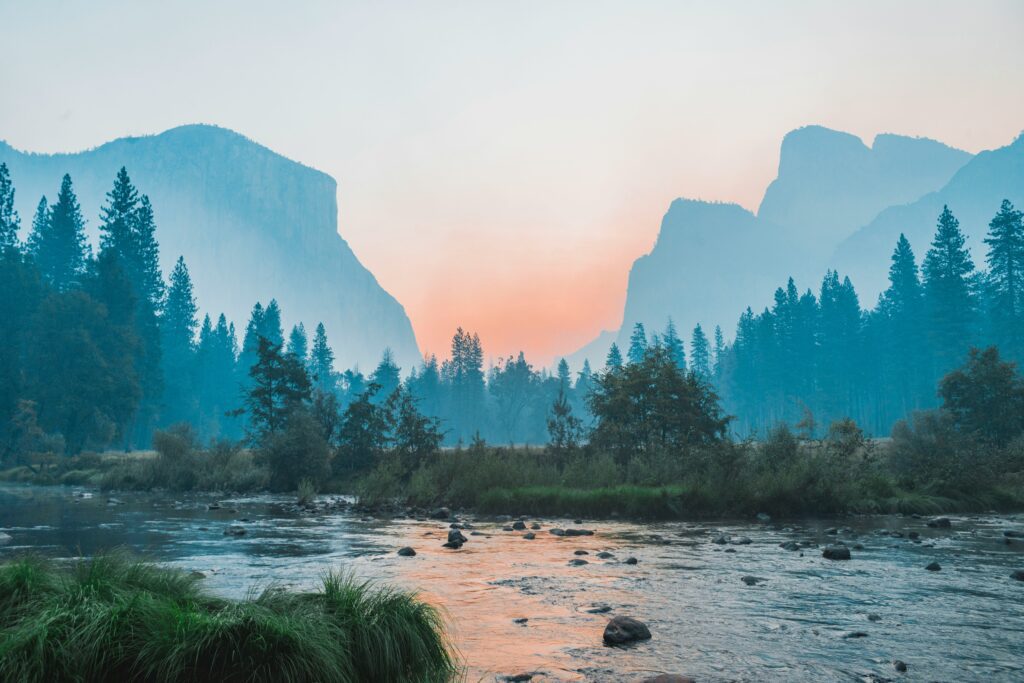
While wide-angle lenses exaggerate depth by stretching foreground and background apart, telephoto lenses flatten scenes, stacking elements like layers in a painting. This doesn’t make the image less dimensional — instead, it gives you control over how space feels. You can use this effect to create graphic, almost abstract landscapes. Think of ridgelines fading into fog, or sand dunes forming clean curves layered one behind the other. This effect gives your photos a unique and often surreal quality. It’s especially powerful in places with repeating shapes, such as mountain ranges, forested hills, or rolling fields.
Access
Sometimes the perfect shot is physically out of reach. Maybe you’re standing across a canyon, or on the edge of a viewpoint, or behind a fence on private land. A telephoto lens gives you the ability to “reach” those subjects safely and creatively. For example, if there’s a lighthouse miles down the coast, or a herd of elk grazing far away, a 300mm or 400mm lens can pull the scene closer without compromising quality. This is also great for exploring details in landscapes — zooming in to reveal textures, wildlife, or hidden shapes you might not even notice with your eyes alone.
It’s like turning your camera into a telescope for storytelling.
When Should You Try It?
Let’s say you’re standing at a viewpoint and the scene in front of you feels overwhelming. Maybe there are too many trees, too much haze, or nothing really “pops” in a wide shot.
Instead of giving up, try this:
- Zoom in slowly and look for contrasts in light and shadow.
- Look for interesting shapes or repetition — lines of trees, fences, cliffs.
- Frame just one part of the scene — make it simple, not grand.
The goal is to see the pieces of the puzzle, not the whole box top.
What Focal Lengths Are Best?
If you’re new to longer lenses, here’s a breakdown of popular choices:
- 70–200mm: Very versatile. Great for tighter frames with a bit of breathing room.
- 100–400mm: Offers stronger compression. Useful for really isolating elements or shooting distant subjects.
- 150–600mm: Less common but impressive for wildlife in landscapes or highly detailed abstracts.
Many photographers use one of these alongside a standard zoom like 24–70mm or 24–120mm so they can adapt to changing scenes.
Real-World Inspiration
Photographers online have shared how often they rely on telephoto lenses for landscapes:
- One shot a stunning silhouette of birds atop a rock stack at 515mm — something you couldn’t do with a wide lens.
- Another mentioned that over half of their landscape shots are taken beyond 100mm, because it allows them to find order in visual chaos.
- A popular takeaway: “The long lens helps me be more deliberate. I take fewer photos, but each one means more.”
Tips for Shooting Landscapes With a Telephoto Lens
It’s not hard — but it’s different from wide-angle shooting. Here’s how to succeed:
- Use a Tripod or Image Stabilization: The more you zoom, the more you’ll notice handshake. Use your camera’s built-in stabilization or a tripod.
- Shutter Speed Matters: Keep your shutter fast enough. A simple rule is: shutter speed = 1 / focal length. So for 200mm, shoot at 1/200 sec or faster.
- Pre-Visualize: Instead of panning wildly, pause and study the scene through your viewfinder.
- Use Haze and Fog: These can help layer your image and create natural separation between elements.
- Shoot Vertical or Panoramic: Don’t limit yourself. Telephoto lenses work beautifully for vertical compositions or multi-frame stitched panoramas.



Why This Matters: Changing Your Mindset
When you switch to a telephoto lens, you also shift your mindset.
You go from asking, “How much can I capture?” to “What do I want to say?”
It’s a slower, more intentional way of working. It helps you develop your eye. You’ll start noticing light falling on a distant slope or the way a single ridge stands out against a bright sky. These are moments you might miss in a wide shot.
In short: telephoto teaches you to see differently.
Bonus Resource
Want help choosing the right lens for your landscape goals? Download our free Lens Selection Guide for Landscape Photographers (coming soon to our Members area) or browse landscape shots uploaded by fellow photographers on our interactive map.